Night Vision Goggle (NVG) Training
Ground and flight training to act as pilot in command using night vision goggles, and recurrent training to keep your NVG privileges current.
Training delivered in your aircraft, at your location.
Course overview
Under 14 CFR 61.31(k), a pilot may act as pilot in command of an aircraft using night vision goggles only after receiving and logging ground training and flight training from an authorized instructor, with an endorsement for each. ATACS gives both, one-on-one, in your NVG-equipped helicopter, and provides recurrent training for pilots who are already NVG qualified.
Who it’s for: helicopter pilots beginning NVG operations, and NVG-qualified pilots who need recurrent training or whose NVG currency has lapsed.
Prerequisites
- A current helicopter pilot certificate and medical certificate
- A helicopter equipped and approved for NVG operations (see Your aircraft)
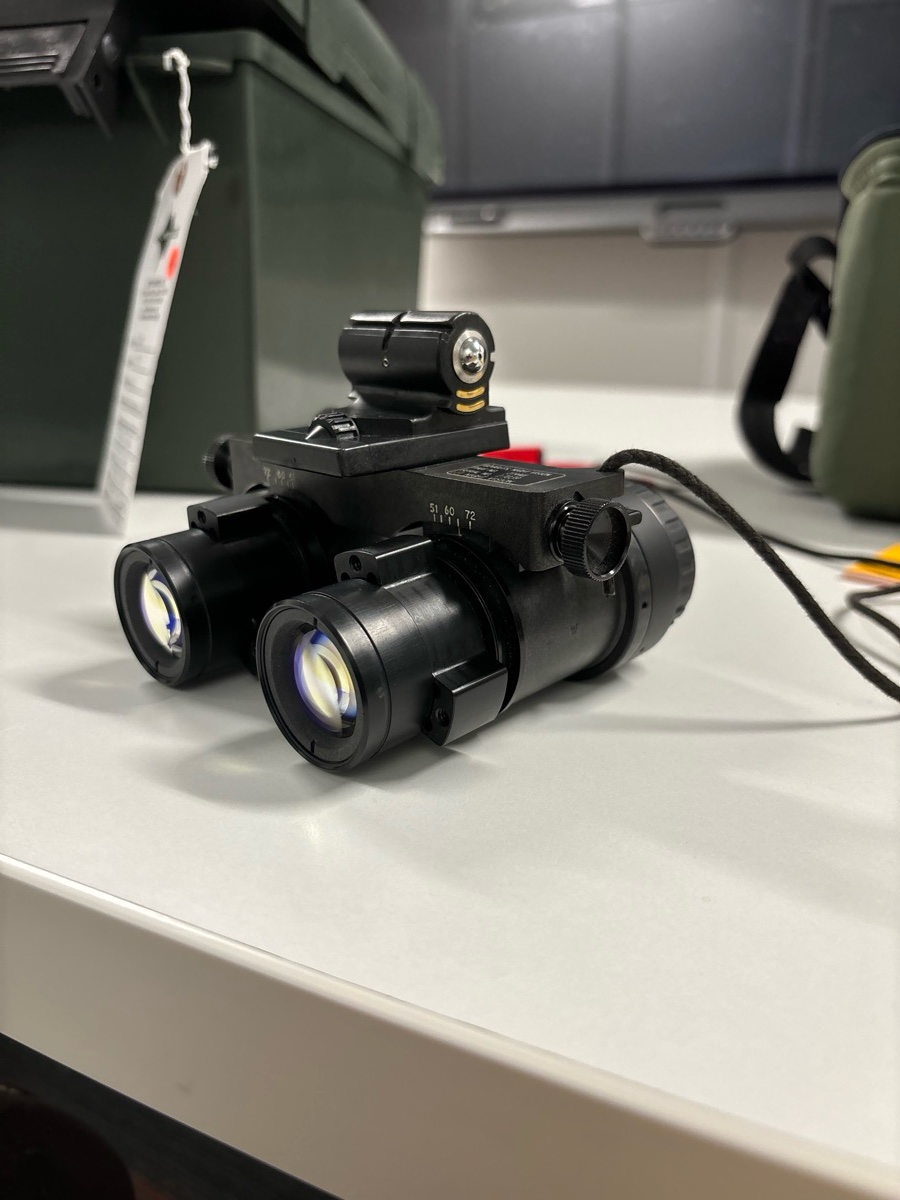
- Night vision goggles approved for use in that aircraft
Courses
NVG Initial
For pilots new to NVG operations. The ground training and flight training required by 14 CFR 61.31(k)(1) and (2), ending with the logbook endorsements to act as pilot in command using night vision goggles.
NVG Recurrent
For pilots already qualified for NVG operations. A review of the NVG ground subjects and flight tasks in your aircraft. If your NVG currency has lapsed, it can end with an NVG proficiency check to get you current again (see Staying current). It can be combined with your aircraft recurrent training.
Combine NVG with your aircraft recurrent training
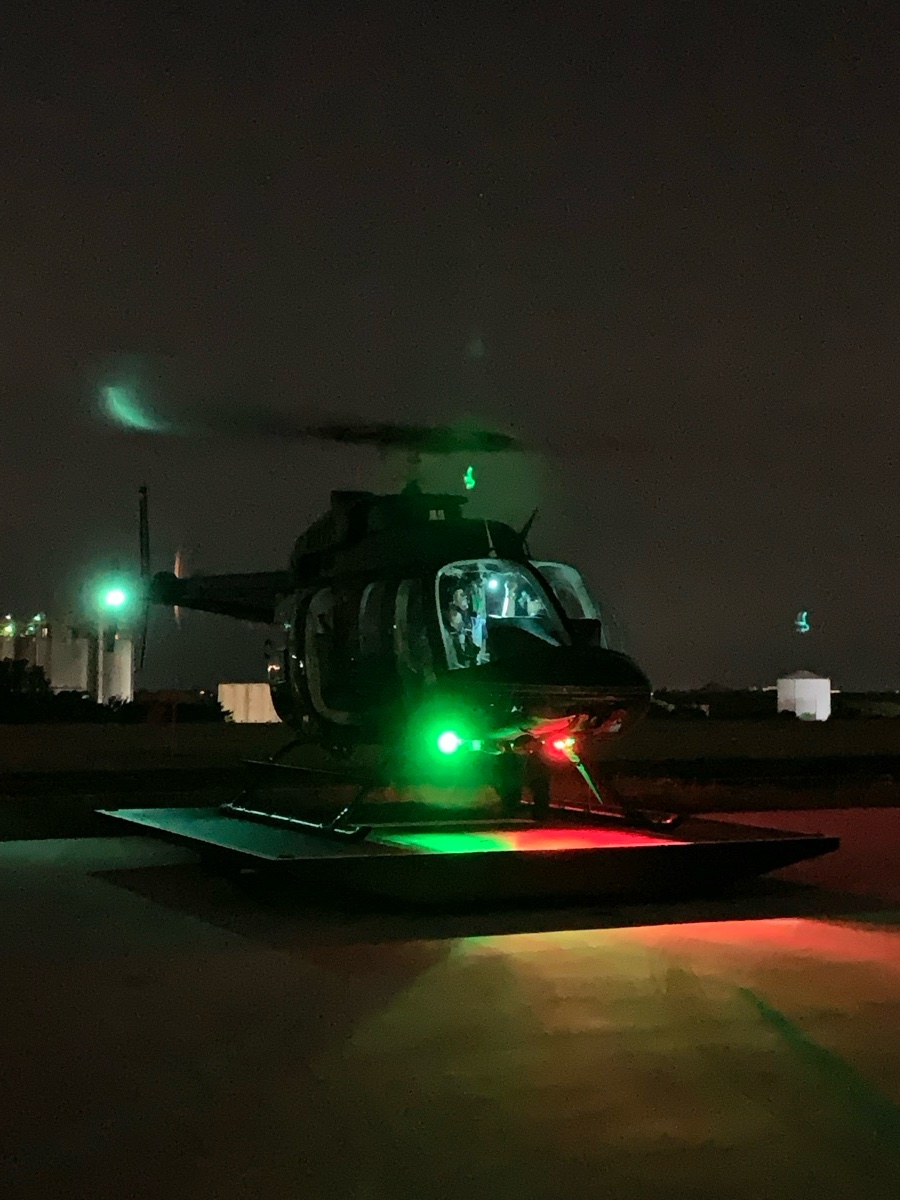
NVG training can be aligned with your aircraft recurrent course. Every maneuver we train in the day is flown again at night on goggles: the normal maneuvers and the emergency procedures, including touchdown autorotations. One visit covers your aircraft recurrent training and your NVG recurrent training.
The NVG tasks you fly and log as the sole manipulator of the controls can also count toward your NVG currency under 14 CFR 61.57(f). See the maneuver lists on the recurrent pages for the Bell 407, Bell 505, Bell 206B JetRanger, Bell 206L LongRanger, Robinson R66 and Robinson R44. Your aircraft must be equipped for NVG operations (see Your aircraft).
NVG Initial training content
Ground training
The subjects in 14 CFR 61.31(k)(1):
- The parts of 14 CFR that relate to NVG limitations and flight operations
- Aeromedical factors: protecting night vision, how the eyes adapt to night, self-imposed stresses, effects of lighting, depth and distance cues, and visual illusions
- Normal, abnormal and emergency operation of NVG equipment
- NVG performance and scene interpretation
- NVG flight planning, including night terrain interpretation and the factors that affect it
Flight training
The tasks in 14 CFR 61.31(k)(2):
- Preflight and use of internal and external aircraft lighting for NVG operations
- Preflight preparation of the night vision goggles
- Piloting techniques with NVGs during takeoff, climb, enroute, descent and landing
- Normal, abnormal and emergency flight operations using NVGs
Staying current
An NVG operation is the part of a flight, between 1 hour after sunset and 1 hour before sunrise, in which you keep visual surface reference using night vision goggles, in an aircraft approved for it (14 CFR 61.1). To act as pilot in command using NVGs, 14 CFR 61.57(f) requires these tasks, performed and logged as the sole manipulator of the controls during NVG operations:
- Three takeoffs and three landings, each with a climbout, cruise, descent and approach phase (only if you want to use NVGs for takeoff and landing)
- Three hovering tasks (only if you want to use NVGs while hovering)
- Three area departure and area arrival tasks
- Three transitions from aided to unaided night flight and back to aided night flight
- Six NVG operations in a helicopter
With passengers on board, the tasks must fall within the 2 calendar months before the month of the flight. Without passengers, within the 4 calendar months before the month of the flight.
Not current? Instead of flying the tasks above, you can pass an NVG proficiency check (14 CFR 61.57(g)). It covers the same ground subjects and flight tasks as NVG Initial, is flown in a helicopter, and must be given by a qualified person, such as an Examiner or a flight instructor qualified for NVG operations in helicopters. ATACS gives NVG proficiency checks in your aircraft, on their own or at the end of NVG recurrent training.
Your aircraft
NVG training is flown in your helicopter, so it must be equipped for NVG operations. 14 CFR 91.205(h) requires the following to be installed, working, and approved for use by the FAA:
- The day and night VFR instruments and equipment in 91.205(b) and (c)
- Night vision goggles
- Interior and exterior lighting for NVG operations
- A two-way radio
- A gyroscopic pitch and bank indicator (artificial horizon)
- A generator or alternator of adequate capacity
- A radar altimeter
NVG cockpit and exterior lighting changes require a supplemental type certificate (STC), not a field approval, and a goggle’s TSO authorization alone does not approve it for use in a particular aircraft (FAA legal interpretation, Fasthoff, 2011). Send us your aircraft’s NVG STC and goggle details with your request.
What you receive
- Logbook endorsements. For NVG Initial, the endorsements for the ground training and the flight training required by 14 CFR 61.31(k)(1) and (2).
- ATACS certificate of completion.
- Training progress record. The ground and flight training you completed, documented as you go.
Any ATACS certificate can be verified by its certificate number.
Training in your aircraft, at your location.
Every ATACS course is flown in your helicopter, where you operate it. Each hour of instruction builds proficiency in the exact aircraft, avionics, and configuration you fly.
- No transfer gap. Train in your own cockpit, not a generic fleet aircraft or simulator.
- No travel or ferry time. Instruction comes to your base, on your schedule.
- Built around your operation. One-on-one training shaped around your mission, your terrain, and how you actually use the aircraft.
- Insurance-aligned. Training completed in the make, model, and tail number your policy covers.
Ready to schedule?
Send a request with your aircraft, its NVG equipment, its location and your preferred dates. Pricing is on the pricing page.